The Sucker Bet in Plain Sight: How Parlays Drain Your Bankroll While You're Busy Dreaming
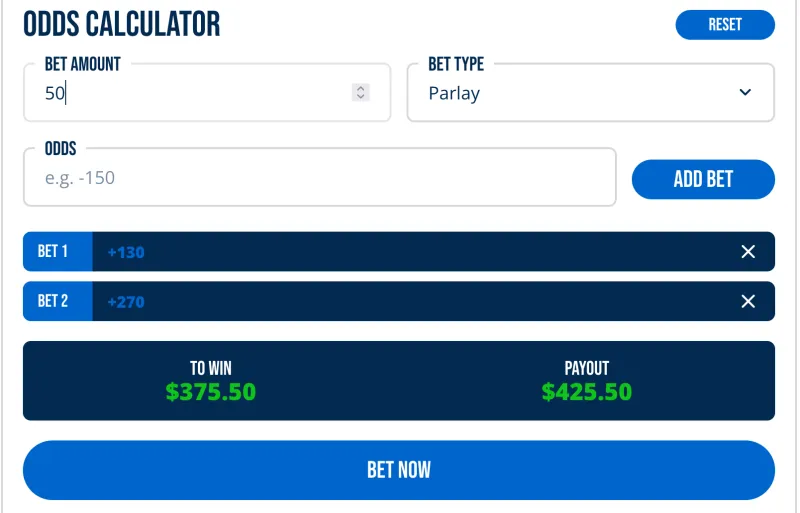
Photo: sports betting slip parlay ticket with odds and calculator on desk, via extrabetamerica.imgix.net
Every Sunday during football season, millions of Americans fire up their betting apps and do the same thing: they build a parlay. Maybe it starts with three confident picks. Then a fourth gets added because, hey, why not? Before long, there's a six-teamer on the board and a screenshot ready to go to the group chat. The potential payout looks incredible. The odds of actually cashing it? That's where things get uncomfortable.
At FB888 Bet, we're all about helping players compete smarter. And when it comes to parlays, the smartest move is usually understanding exactly what you're signing up for before you tap "Place Bet."
The Dream Versus the Math
Let's start with the pitch, because it's genuinely seductive. A $50 six-team parlay can return upward of $3,000 at standard odds. That's a 60x return on a single ticket. Compare that to grinding out straight bets at -110 and suddenly the parlay feels like the obvious play.
Except it isn't. Here's why.
In a standard point-spread market, each individual leg carries roughly a 50% chance of winning — but the sportsbook prices those legs at -110, meaning you have to risk $110 to win $100. That built-in margin is called the "vig" or "juice," and it's how books make money on straight wagers. On a single bet, the house edge is around 4.5%. Manageable. Beatable over time with sharp picks.
Now chain six of those legs together. Your true probability of winning all six is 0.5 to the sixth power — roughly 1.56%. But because each leg carries the book's margin, the parlay pays out as if each leg has about a 47.6% win rate, not 50%. Stack that discount six times and the house edge on your six-teamer balloons to somewhere between 15% and 20%, depending on the book. You're not playing a game with a small edge against you. You're playing a game where the house has a structural advantage four times larger than a standard bet.
Marco Delgado, a professional bettor based in Nevada who has made a living on closing line value for over a decade, puts it bluntly: "Parlays are where sharp money goes to die. I run the numbers every few years just to remind myself. The expected value destruction is staggering. The only time I touch one is when there's a specific correlated angle the book hasn't priced correctly, and those spots are rare."
Why Casual Players Love Them Anyway
Understanding the math doesn't explain why parlays are consistently the most popular bet type among recreational players. For that, you need to understand psychology.
Sports betting platforms — and this is true industry-wide — prominently feature parlay builders, same-game parlays, and "boost" promotions that make multi-leg wagers feel like the natural way to bet. There's a reason for that. The house edge on parlays is significantly higher than on single-game wagers, and the variance is massive, meaning books can absorb bad weeks knowing the long-run math heavily favors them.
For the player, the appeal is rooted in something deeply human: the desire for a transformational win. A $50 straight bet returning $95 is fine. A $50 parlay returning $3,200 is a story. It's a screenshot. It's bragging rights. Sportsbooks understand this completely, which is why parlay marketing leans hard into the fantasy of the big hit rather than the reality of the expected return.
There's also what behavioral economists call "probability neglect" — when potential rewards are large enough, people essentially stop processing the actual odds. A 1.5% chance and a 10% chance feel similarly remote, even though one is nearly seven times more likely than the other.
The Same-Game Parlay Problem
If standard parlays are a tough sell mathematically, same-game parlays (SGPs) are even more complex. These wagers, which let you combine multiple outcomes from a single game — say, a quarterback throwing for 300 yards AND his team covering the spread AND a specific receiver hitting 75 receiving yards — have exploded in popularity since their mainstream introduction a few years ago.
Books price SGPs using proprietary correlation models. The challenge for players is that those models are opaque. You can't easily reverse-engineer whether the payout you're being offered accurately reflects the actual correlation between legs. In many cases, books are capturing additional margin precisely because the correlation structure is hard for casual bettors to evaluate.
"The same-game parlay product is genuinely fun to build, and I understand why people love it," says Renata Voss, a former odds compiler who now consults with betting syndicates. "But from a pricing standpoint, the books have a significant informational advantage. They've run millions of simulations on those correlations. Most recreational players are going just on feel."
When Parlays Aren't Automatically Terrible
Fair is fair — there are narrow situations where parlays make strategic sense. Correlated parlays, where winning one leg meaningfully increases the probability of another leg winning, can offer genuine value when the book's pricing doesn't fully account for that relationship. The classic example: betting a significant underdog on the moneyline combined with the over. If the underdog wins outright, they often do it by playing high-scoring, open games. The legs aren't independent — they're connected.
Promotion-driven parlays are another exception. When a book offers a parlay insurance promotion — say, refunding your stake if one leg loses — the expected value calculation changes meaningfully. Sharp players actively seek these out and size bets accordingly.
But these are exceptions, not the rule. The default parlay, built on gut feeling and Sunday morning confidence, is almost always negative expected value at a rate that would embarrass most casino table games.
Playing It Smarter at FB888 Bet
Here's the bottom line: if you enjoy parlays for the entertainment value, there's nothing wrong with that. Set a specific parlay budget — money you're comfortable treating as pure entertainment spend — and stick to it. Don't let a losing parlay ticket convince you to chase with bigger single-game bets.
If you're trying to build a long-term winning record, though, the data is clear. Straight bets, sharp line shopping, and disciplined bankroll management outperform parlay chasing every time. The players who win consistently aren't the ones hitting one massive ticket. They're the ones making slightly better decisions than the market, over and over, on individual wagers where the house edge is as thin as possible.
Dreaming of the big score is human. Knowing the math behind it is what separates the legends from the broke dreamers.